Heating accounts for a significant share of energy costs in Polish apartments, particularly in older buildings with central heating systems from the communist era. Adding a smart thermostat to a standard radiator valve or a central boiler can reduce consumption by 10–20% through scheduled temperature drops during working hours. This article compares three devices that are actually available in Poland and compatible with the most common heating configurations here.
The three devices under review
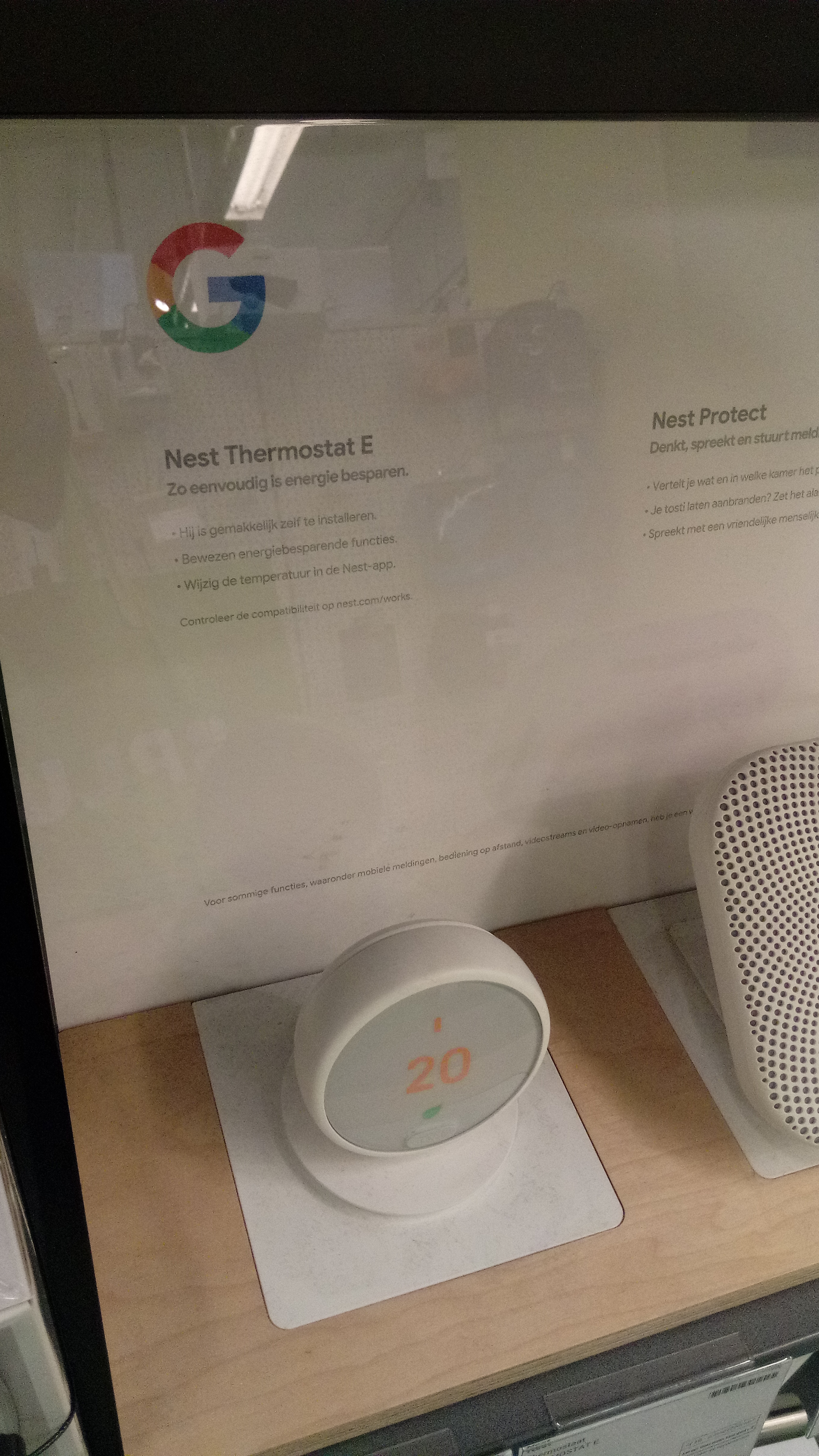
Nest Thermostat E
The Nest Thermostat E is a wall-mounted thermostat designed for central heating systems. It connects over Wi-Fi and integrates with Google Home. In Polish apartments, it works best with gas boilers that have a standard two-wire switching connection. Installation requires wiring to the boiler control board — not something for most renters unless the landlord agrees. The frosted display is intentionally subtle; the device blends into white walls without drawing attention.
Nest's learning algorithm adjusts the schedule based on when you manually change the temperature over roughly one week. After that, it runs autonomously. The app allows remote adjustments from anywhere with internet access. Price in Poland: approximately 649–749 PLN.
Nest Thermostat E requires a C-wire (common wire) in most Polish boiler installations. Before purchasing, check whether your boiler wiring has a free C-wire terminal. Many installations from before 2010 do not.
Netatmo Smart Thermostat
Netatmo's approach separates the wall thermostat from a relay box that mounts near the boiler. The two communicate over a proprietary radio signal, avoiding the C-wire problem. This makes it significantly easier to install in older Polish apartments. The relay box wires directly to the boiler's switch terminals, while the thermostat simply sits in a room and runs on two AA batteries.
Schedules are set manually through the Netatmo Energy app. There is no auto-learning; you define the weekly programme yourself. This is actually preferred by many users who want predictable behaviour. Netatmo's biggest advantage: the core functionality works without internet. Temperature schedules run locally on the relay box. Price: approximately 799–899 PLN for the thermostat and relay bundle.
AVM FRITZ!DECT 301
FRITZ!DECT 301 is a radiator thermostat — it replaces the manual valve head on a radiator, not a central wall thermostat. This distinction matters: it controls one radiator, not the entire heating system. For apartments where individual radiator control is preferred (or where the central boiler is not accessible), FRITZ!DECT thermostats offer room-by-room temperature management.
The FRITZ!DECT system requires a FRITZ!Box router as the base station — AVM's own DECT radio protocol is not compatible with generic hubs. If you already have a FRITZ!Box (very common in Poland via internet providers), adding one or more DECT 301 heads costs approximately 249–299 PLN per unit. The scheduling is done through the FRITZ!Box interface, which is detailed and reliable.

Subscription requirements
- Nest Thermostat E: No subscription needed for basic scheduling and remote access. Google Home integration is free. Works with Google Assistant without additional cost.
- Netatmo Smart Thermostat: No subscription at all. Full functionality including remote access is free. Local operation without internet is also possible.
- FRITZ!DECT 301: No subscription. All features run through your local FRITZ!Box.
Compatibility with Polish heating systems
Most apartments in Poland fall into one of these categories:
- District heating (MPEC/PEC): Central hot water supplied to the building. Individual apartments have a heat exchanger or direct radiator loop. Smart thermostats attach to the individual radiator valves — FRITZ!DECT 301 is the most straightforward option here.
- Individual gas boiler: Common in newer housing developments. Both Nest Thermostat E and Netatmo work well here, with Netatmo being easier to install without C-wire.
- Electric underfloor heating: Requires a different class of thermostat entirely — a floor sensor thermostat, not covered in this article.
Energy savings: what to expect
Scheduled temperature setbacks of 3–4°C during eight hours of absence (workday) can reduce heating energy consumption by 8–15% annually, depending on building insulation. In a 60 m² apartment paying 400 PLN/month for heating in winter months, that represents a saving of 32–60 PLN per month during the heating season (October–April). Payback period for Netatmo: roughly two heating seasons.
Savings depend heavily on building insulation quality. Older pre-1990 concrete buildings in Poland are often poorly insulated — smart thermostats reduce waste but cannot compensate for heat loss through walls. Insulation upgrades have a much larger impact on total costs.
Which to choose
For renters in apartments with district heating and individual radiators, FRITZ!DECT 301 heads require no permanent installation and can be taken when moving. For apartments with a gas boiler and an accessible wiring panel, Netatmo is the most reliable option due to local operation. Nest Thermostat E suits those already invested in the Google ecosystem who have confirmed C-wire availability.